Enhanced Structural Safety
Removes weak branch unions and dry deadwood before seasonal storms hit the Bendigo valley.
Professional, AS4373-compliant tree pruning to maintain canopy health, improve structure, and clear buildings in White Hills.
Servicing private gardens, street frontages, and commercial grounds across White Hills.
Our Tree Pruning White Hills service applies modern arboricultural science to improve the health, safety, and appearance of your trees.
White Hills features high summer temperatures averaging 30°C in January and shallow soils with poor permeability. Unmanaged mature exotics and eucalypts carry heavy tip weight, making selective AS4373 pruning vital to mitigate heat-stress limb failure.
Removes weak branch unions and dry deadwood before seasonal storms hit the Bendigo valley.
Correct pruning practices avoid fungal infection, enabling mature elms and natives to thrive for decades.
Keep branches clear of electrical service wires, solar panel arrays, and garage roofs.
We evaluate the tree's health, crown density, branch structure, and proximity to buildings.
We outline exact cuts based on AS4373 criteria (thinning, lifting, or reduction).
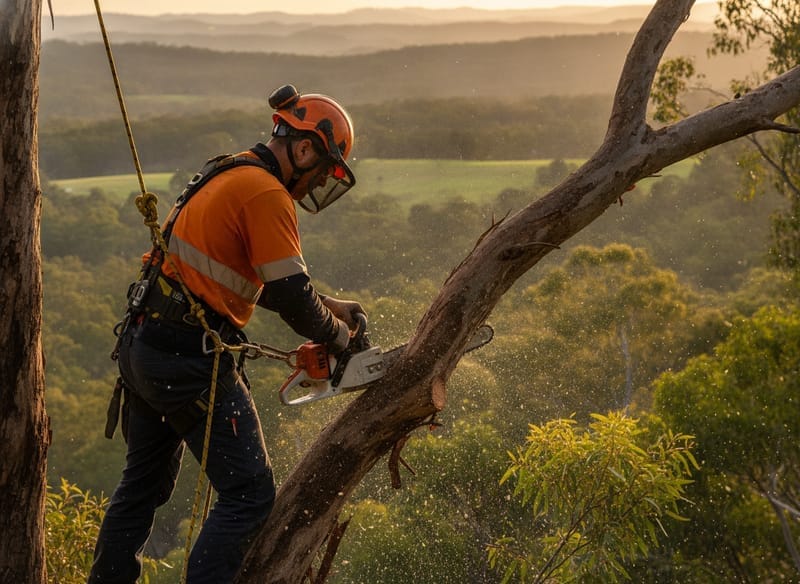
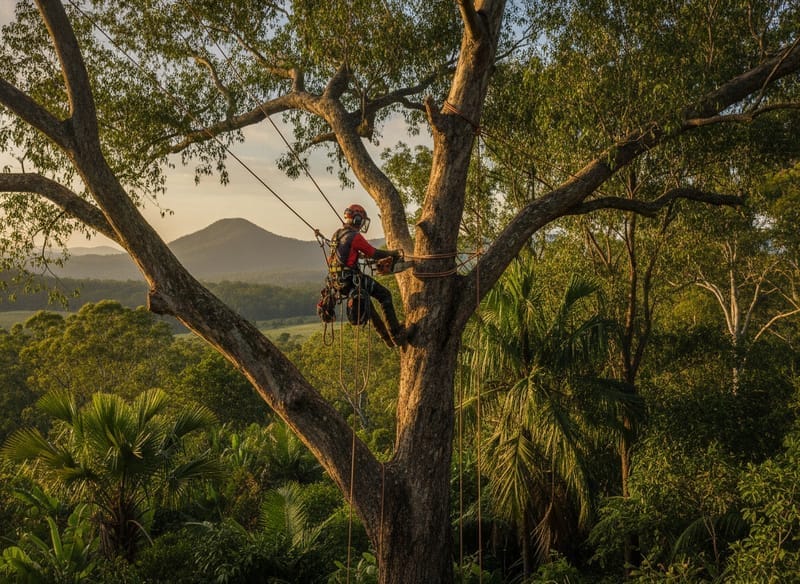
Qualified arborists use rope access to reach outer canopy limbs without damaging main bark.
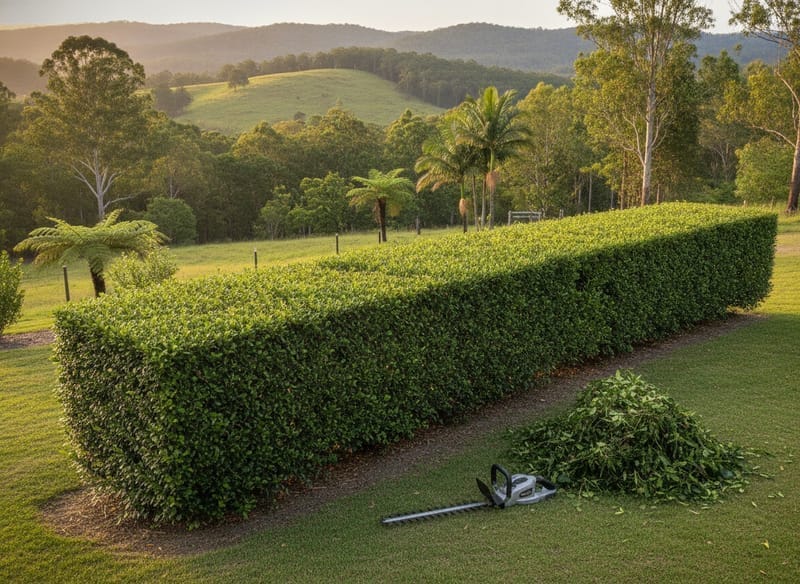
All prunings are mulched, leaving your garden neat and free of twigs and leaves.
When it comes to professional Tree Pruning White Hills properties demand an approach that genuinely understands our unique local climate and canopy. Our city blends historic Victorian-era exotics with remnant native box ironbark forest, and keeping these trees healthy requires specialised knowledge. Whether you are managing an English Elm in a heritage streetscape or a towering Red Ironbark on an acreage block, our team provides the precise, structural pruning needed to preserve your trees and protect your assets.
Bendigo's environment is demanding. With hot, dry summers, sudden severe storms, and notoriously shallow, stony duplex soils, our trees are routinely subjected to high stress. Overgrown or poorly structured canopies can act like a sail, placing immense wind load on vulnerable root plates. By proactively managing your trees through targeted pruning, we reduce these risks while improving sunlight penetration and aesthetic appeal.
As local arborists, we do not believe in indiscriminate lopping. We use highly skilled rope access and elevated work platforms to perform precise cuts that promote healthy regrowth. Our climbers are dedicated to maintaining the health and character of the White Hills canopy, delivering tree care that adds long-term value to your property.
There is a vast difference between professional arboriculture and unregulated tree lopping. When untrained operators or well-meaning homeowners attempt DIY pruning, the results are often detrimental and sometimes permanently damaging. One of the most common issues we see in the region is "topping" or "heading back"—where branches are indiscriminately chopped midway. This leaves large, jagged stubs that cannot heal, allowing decay and fungal infections to enter the tree's vascular system. Topping also forces the tree into a panic state, causing it to push out epicormic shoots. These rapid-growth shoots are weakly attached to the bark rather than the solid heartwood. In Bendigo's storm season, these weakly attached limbs are the first to snap and fall on roofs, fences, or vehicles. Furthermore, over-thinning a canopy—known as "lions-tailing"—concentrates all the wind load at the very tips of the branches, drastically increasing the likelihood of structural failure. Our climbers solve these problems by strictly adhering to the AS4373 Pruning of Amenity Trees standard. We use proper target pruning techniques, making every cut at the branch collar. This allows the tree to naturally compartmentalise the wound and seal out decay. By carefully managing the canopy and never removing more than 25–30% of the live foliage in a single prune, we maintain the tree's energy reserves and structural integrity, keeping your White Hills property safe.
Our tree pruning operations are strictly governed by arboricultural science and Australian Standards. Here are the precise AS4373-compliant methods our arborists utilise.
We selectively remove small live branches throughout the canopy. This reduces wind resistance and structural load on the tree while preserving its natural shape. We strictly limit foliage removal to a maximum of 25–30% per prune to ensure the tree maintains its necessary energy reserves.
This involves carefully removing the lower branches of the tree to increase vertical clearance. It is essential for clearing driveways, footpaths, and sightlines on corner blocks, ensuring pedestrian and vehicular safety without compromising the upper canopy structure.
When a tree has outgrown its space, we perform selective shortening of branches back to a lateral branch of suitable size. This reduces the overall height and spread of the canopy safely, distinct from harmful topping, and is all executed at proper branch unions.
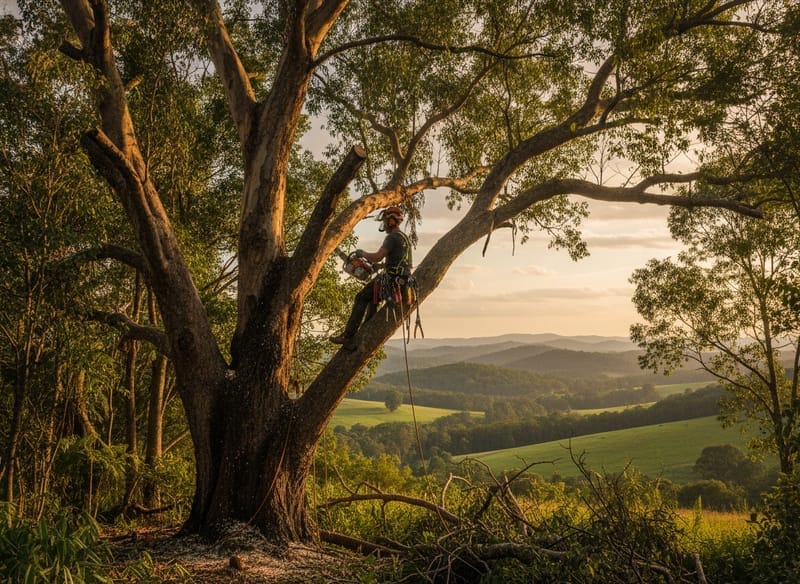
We climb the tree to systematically remove dead, dying, diseased, or detached branches. This is a critical risk-management service for mature native trees, such as River Red Gums and Ironbarks, reducing the hazard of sudden limb drop over homes and outdoor living areas.
Focused on young, developing trees, we prune to establish a strong, safe structural framework. By encouraging a single dominant leader and well-spaced scaffold branches early in the tree's life, we prevent major structural defects and costly interventions as the tree matures.
We perform highly targeted pruning to resolve specific conflicts, such as clearing branches away from rooflines, property boundaries, or service wires. Every cut is mapped out to resolve the physical obstruction while leaving the rest of the tree's aesthetic intact.
Our process is designed to be seamless, transparent, and entirely professional. It begins with a comprehensive on-site assessment at your White Hills property. One of our experienced arborists will evaluate the tree's species, health, structural condition, and the surrounding site access. We listen to your goals—whether it is hazard reduction, solar access, or canopy shaping—and provide a detailed, obligation-free quote outlining the specific pruning methods required.
Once the quote is accepted, we navigate any necessary compliance checks. We assess whether the job falls under the City of Greater Bendigo's Clause 52.37 Canopy Trees regulations or local heritage overlays, ensuring all work is legally sound. On the scheduled day, our fully equipped trucks arrive on time. We hold a pre-start safety briefing to identify any site hazards, including checking for unstable ground or historical mine shafts before positioning our heavy equipment.
Our AQF Level 3 climbers then ascend using advanced rope access techniques or Elevating Work Platforms (EWPs). Using top-handle chainsaws and silky hand saws, we execute precise collar cuts. Meanwhile, our ground crew safely controls the descent of every branch using rigging gear, ensuring zero impact on your gardens or structures. Finally, all pruned material is processed through our wood chippers, and your property is raked and blown completely clean before our trucks depart.
Safety and compliance are the foundation of our business. All our pruning operations strictly adhere to AS4373 — Pruning of Amenity Trees, ensuring every cut benefits the long-term health of the plant. Our on-site teams are led by AQF Level 3 qualified climbing arborists, and we have AQF Level 5 consulting arborists available for formal assessments and council reporting.
We are fully insured with comprehensive Public Liability and WorkCover for all employees, giving you complete peace of mind. Our team holds all necessary high-risk work licences, including EWP tickets, Working at Heights certification, and traffic management qualifications for roadside pruning operations. We do not take shortcuts with safety or the law.
Delivering safe Tree Pruning White Hills residents can rely on requires deep local knowledge. The City of Greater Bendigo's planning scheme was recently updated with Clause 52.37, meaning boundary canopy trees (over 5m tall and 0.5m trunk circumference at 1.4m) may require a VicSmart permit for major works. Furthermore, while Bendigo has no overarching significant tree register, White Hills features specific Heritage Overlays that protect individual exotic trees by street address, as well as Significant Landscape Overlays (SLO1) in surrounding bush-residential blocks that protect all native vegetation.
The ground beneath us is equally complex. The region's Ordovician sandstone and shallow duplex soils have very low permeability, meaning species like Grey Box and Red Ironbark often develop wide, shallow root plates. When pruning, we carefully balance the canopy to prevent wind-throw on these vulnerable root systems. Additionally, historical depression-era mine shafts capped with timber sleepers dot the Bendigo subsurface. We always carefully assess older blocks before bringing in heavy EWPs or chipper trucks, often opting for low-impact rope access to preserve both the tree and the stability of your property.
After our climbers have completed the pruning, the tree requires minimal immediate intervention, as proper branch collar cuts will compartmentalise and heal naturally. We recommend ensuring the root zone receives deep, infrequent watering during Bendigo's hot summer months to help the tree recover from the loss of foliage. If you have mature English Elms on your property, monitor them closely. The City of Greater Bendigo does not treat private trees for Elm Leaf Beetle; this defoliating pest is the homeowner's responsibility and typically requires treatment every two years. We advise scheduling a routine canopy inspection with our arborists every 3 to 5 years, or following any severe spring storm, to ensure your trees remain structurally sound and vibrant.
Tree pruning costs in White Hills vary based on tree size, access conditions, and the volume of canopy reduction required.
We provide transparent quotes that clearly detail the specific pruning methods to be used.
We prune residential and commercial trees across White Hills and surrounding Greater Bendigo suburbs.
Protect your tree health and enhance your garden with qualified arborist pruning.
Get a Free Quote