Property Restored to Safety
Eliminate dangerous dangling branches and clear blocked paths so family life and trades can resume safely.
Comprehensive cleanup, limb extraction, and structural making-safe following severe storm events in Flora Hill.
Clearing storm damaged trees across Flora Hill, Spring Gully, Quarry Hill, and Kennington.
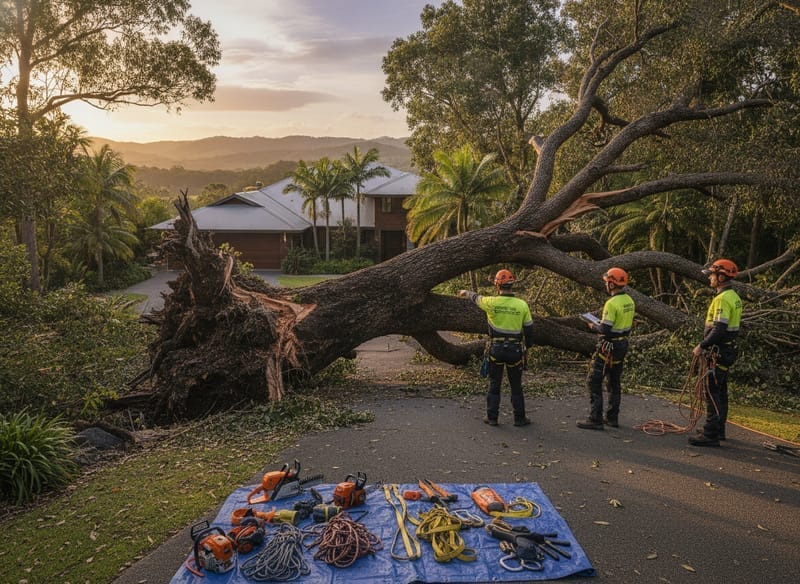
When intense storm fronts hit Greater Bendigo, heavy rain and gale-force wind gusts cause substantial canopy destruction. Our storm damage tree removal Flora Hill service handles everything from cracked major limbs to fully uprooted mature trees.
Severe storm events, like the intense October storms that hit the region, cause massive damage in Flora Hill where shallow root systems fail in waterlogged clay. Trees with heavy crowns, such as mature English elms and native Grey Box, suffer severe limb tear-out requiring expert post-storm reduction.
Eliminate dangerous dangling branches and clear blocked paths so family life and trades can resume safely.
Expert remedial pruning can clean up torn limbs and save damaged trees from needing full removal.
We provide detailed invoices documenting storm-related impact to make insurance claims straightforward.
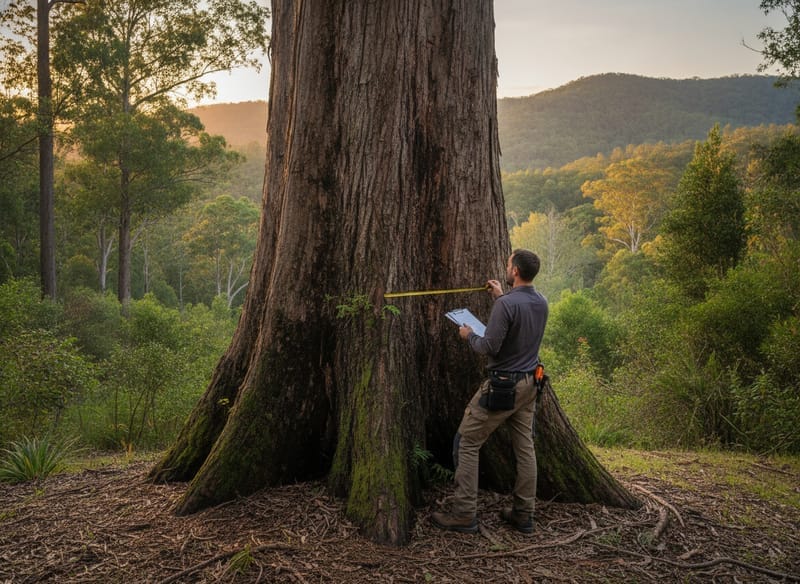
We inspect the storm debris across your property, assessing root stability and hanging branch hazards.
We provide a comprehensive quote detailing limb removal, canopy remediation, chipping, and haulage.
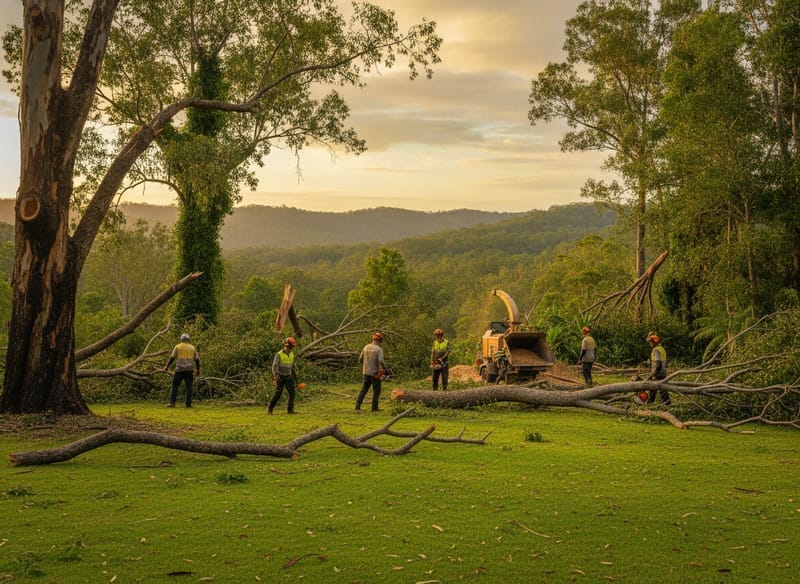
Our team cuts, rigs, and chips all damaged timber systematically, starting with the most hazardous zones.
We make clean target cuts on torn branch stubs and rake your yard clear of twigs and green waste.
Bendigo’s severe weather can change in an afternoon, turning a beautiful suburban canopy into a severe hazard. When high winds and heavy rainfall hit the shallow, stony Ordovician soils of our region, mature trees are pushed to their absolute limits. If a canopy tree has failed on your property, securing the site quickly is critical to preventing further destruction. We provide the rapid, professional Storm Damage Tree Removal Flora Hill residents and property managers need to protect their assets. Whether it is a snapped Red Ironbark resting on a roof, a split English Elm blocking your driveway, or a complete root-plate failure after a localized wet-season deluge, our team is equipped to respond. Our local arborists understand the specific terrain, native box ironbark species, and historic exotics of the area. We bring the heavy equipment and technical expertise necessary to ensure every emergency response is handled with precision, safety, and a deep respect for your property.
Tackling a downed or severely damaged tree yourself is one of the most dangerous things a property owner can do. When heavy canopy trees like Grey Box, Red Box, or London Plane fail, they rarely fall cleanly. They become hung-up in adjacent branches or rest on structures with massive, unpredictable tension stored in their dense timber.
A common and fatal mistake is attacking a fallen limb with a domestic chainsaw. Unseen compression and tension wood can cause the trunk to violently spring back, instantly pinch the saw bar, or cause the timber to barber-chair. Uprooted trees present an even greater hidden danger: once the heavy trunk is severed, the massive, soil-laden root plate can snap back into its cavity, easily crushing anything in its path.
Furthermore, improper clearing often causes secondary damage to roofs, fences, and powerlines that insurers may refuse to cover. By engaging our fully equipped arborists, you eliminate these risks. We use specialized rigging, Elevating Work Platforms (EWPs), and advanced tension-release cutting techniques to dismantle the hazard systematically. We manage the immense weight of green timber—which easily exceeds the capacity of standard trailers—and take the guesswork out of the disaster, keeping you, your family, and your home safe.
Our arborists approach storm-damaged sites systematically, deploying specialized equipment and technical felling strategies to ensure hazards are neutralised without causing further damage to your property.
We walk the site to tag trees by priority. Immediate threats to life, dwellings, and powerlines are addressed first. We secure the drop zones, assess structural cracks in standing timber, and formulate a safe dismantling plan before a single cut is made.
Fallen and leaning trees store extreme kinetic energy. Our AQF Level 3 climbers utilize heavy-duty ground saws like the Stihl MS500i and precise step-cuts to safely relieve sprung branches, preventing violent kickback or trunk splitting during the cutting process.
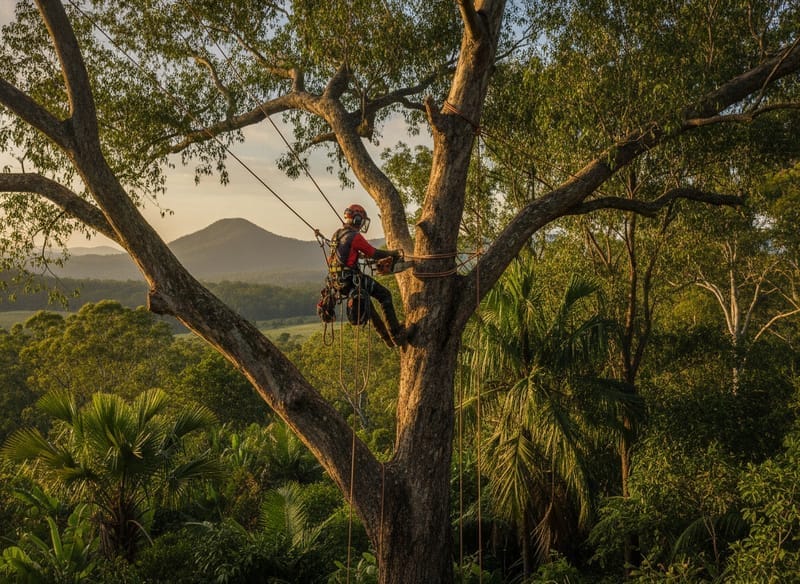
When a failed branch is lodged high in an adjacent tree, we deploy rope-access techniques and mechanical advantage rigging. We secure the compromised limb, then safely lift and lower the heavy timber to the ground in controlled sections without damaging the retaining tree.
High winds combined with Bendigo’s low-permeability soils frequently cause whole-tree root-plate failures. We carefully secure the stump, sever the trunk using specific release cuts to prevent the plate from snapping back into the hole, and safely process the remaining debris.
For massive canopy trees that have collapsed onto houses or fragile structures, we coordinate crane lifts. The crane takes the dead weight of the fallen tree, allowing our climbers to make clean cross-cuts and lift the timber away without crushing the roof below.
When a storm hits, chaos often follows. We bring order back to your property through a structured, highly efficient cleanup process designed specifically for post-event triage. - Emergency Call-Out and Triage: We prioritize urgent hazards, arriving rapidly at your Flora Hill property with the necessary heavy equipment to assess the risk to structures, roads, and powerlines. - Photographic Evidence and Quoting: Before we start cutting, we take comprehensive photos of the damage. We provide a detailed quote breaking out each tree, which is essential for processing your home insurance claims smoothly. - Make-Safe Execution: Our primary goal is to remove the immediate danger. We systematically dismantle trees resting on roofs, secure hanging branches, and clear blocked accessways, utilizing our EWPs and rope-access systems. - Processing and Cleanup: Once the site is safe, we process the remaining timber. We run branches through our high-capacity 12-inch wood chippers, load heavy logs into our tipper trucks, and leave your yard clean and accessible. - Post-Removal Documentation: If your insurer or the local council requires an arborist report detailing the structural failure and the necessity of the emergency removal, our qualified team provides all the required paperwork.
Storm cleanup requires rigorous safety and compliance frameworks. Our team operates with full public liability insurance and WorkCover, ensuring your property and our staff are protected during high-risk emergency work. All climbing and dismantling are performed by AQF Level 3 qualified arborists holding current Working at Heights and EWP tickets. For trees that are damaged but salvageable, we apply AS4373 (Pruning of Amenity Trees) standards to remove torn branches and restore structural integrity without resorting to harmful lopping. Under the City of Greater Bendigo planning scheme, emergency work is exempt if a tree presents an immediate risk of injury or property damage. We provide the professional oversight needed to ensure this exemption is applied correctly.
Flora Hill features a unique mix of residential streets lined with heritage exotics and blocks carrying heavy native canopies. The local geology plays a massive role in how trees fail here. The shallow Ordovician sandstone and sodic duplex soils mean that mature Red Ironbarks and Grey Boxes often sit on very shallow root plates. When heavy winter or spring rains saturate the ground, a single severe wind event can lever these massive trees entirely out of the earth. During the summer months, sudden limb drop on hot, still afternoons is another common failure mode, particularly with large River Red Gums. While the City of Greater Bendigo's Clause 52.37 regulates the removal of canopy trees, immediate emergency hazards are exempt. However, because Flora Hill sits close to historic precincts, property owners must be mindful of the Heritage Overlay, which can protect specific elms or oaks by address. We navigate these local council nuances to ensure your emergency clearing is fully compliant.
Once the immediate hazards are cleared, it is crucial to monitor your remaining canopy. The loss of a neighbouring tree can expose previously sheltered trees to new wind loads, significantly increasing their risk of future failure. Check the base of your large trees for soil heaving, new cracks, or raised earth, which indicate root-plate movement. You should also watch for hanging broken branches that may have been obscured in the initial chaos. If you notice any of these signs, or if a surviving tree requires AS4373-compliant restorative pruning to correct its balance, call our team back for a comprehensive health and safety assessment.
Storm damage cleanup pricing depends on the number of damaged trees, complexity of dismantling, and volume of debris.
We offer honest, upfront pricing for all post-storm cleanup work.
We provide dedicated storm cleanup services throughout Flora Hill and surrounding districts.
Contact our experienced arborists for comprehensive cleanup and storm damage remediation.
Get a Free Quote